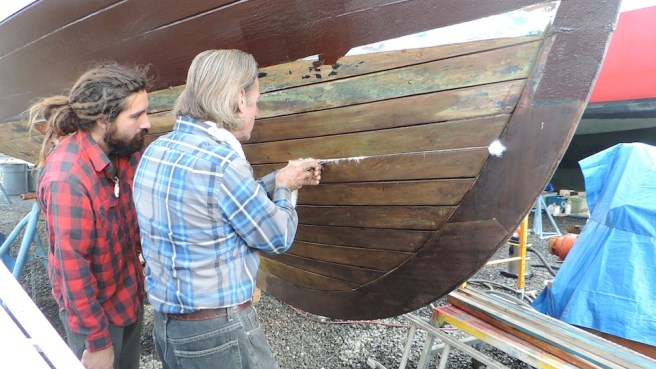
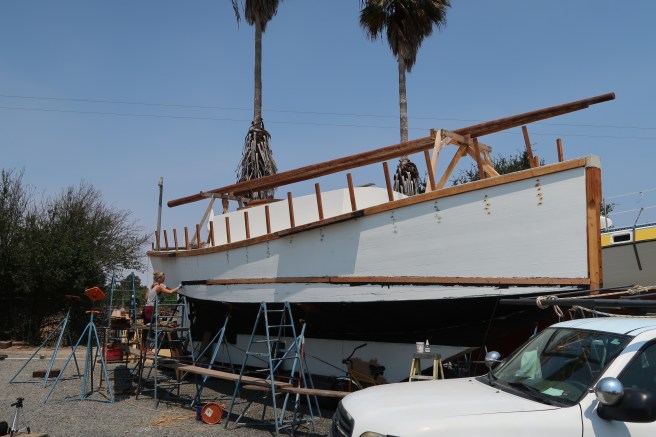
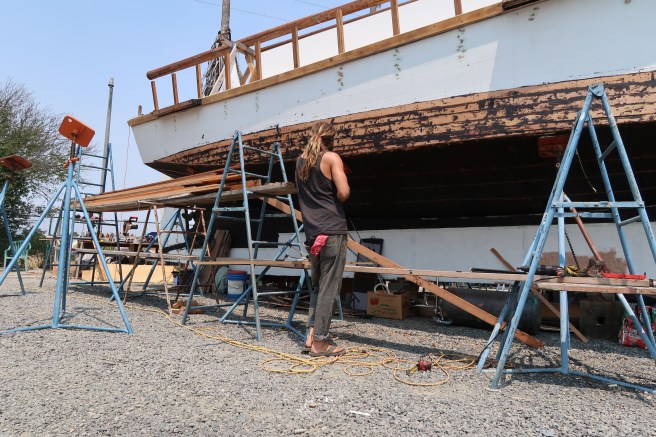
Armor plating, also known as sheathing, has been our life for the last two weeks. We started at the waterline Saturday before last and we are blasting through it. We’ve now sheathed almost to the transom. Our goals have been waterline down then from boat stand to boat stand, day by day. This is day one:


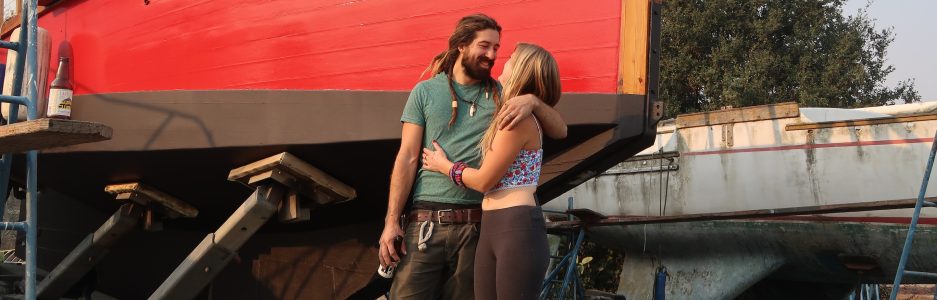
The Young Salt and the Tar Queen
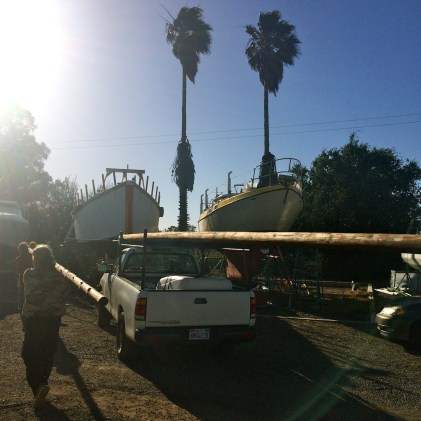
Getting the first three planks on took the longest as we had to test fit then permanently tar and screw them in; setting the flow for the rest of the planks down to the chine. Now that I think about it I don’t know if I can call this day one… Days prior to this we had to sort and transport all the good pieces of fir to the boat from their storage place at my parents then plane and mill those boards into 3 inch by 3/4 strips of sheathing planks.


You’re probably asking yourself why…? Why sheathing? What’s the purpose? Is that necessary?
We debated the same questions.


So the purpose: sheathing is essentially double planking an already beefy hull but the true purpose beyond extra strength and basically making the boat bulletproof is it is a sacrificial layer. Meaning worms, icebergs, pilings, partially sunk shipping containers, you name it could attack the sheathing leaving the main planking safe or at least keep us from leaking/sinking until we can repair damage. Most importantly, meaning Garrett’s number one concern, is the protection from worms. We plan to sail to the tropics. Lush beautiful crystal clear blue water but we’re not the only ones that thrive there; teredo worms love it too. Interesting fact about marine worms is that they tend, when eating wood, to stay in one plank zig zagging back and forth up and down. This makes having a sacrificial layer distanced from your structural planking with heaps of tar a wonderful piece of mind that your home will be safe and its integrity held.
And is it necessary: Is building a boat?…
We’ve come this far why not a little further into insanity?
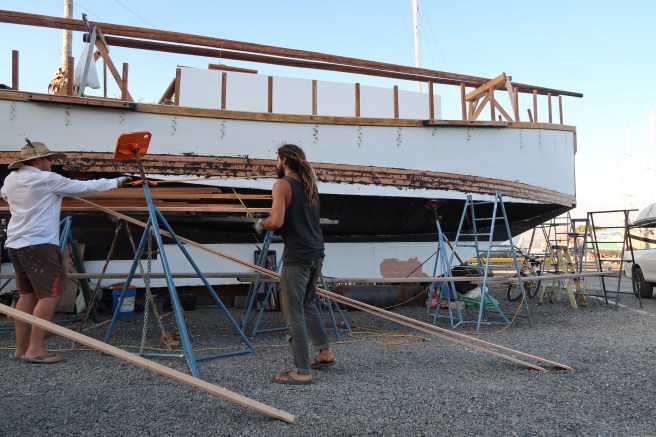
Day two Garrett set a big goal, sheath all the way to the chine before days end. Garrett and I did ok, getting two full runs up by about 5 leaving only 2ish runs left to reach the chine. But we were pooped! Thanks to our amazing neighbor who cranked up the
sea shanty tunes and kicked our butts into gear for a final push. With his help and every minute of daylight
we achieved that goal.
…We really wore Swab out!
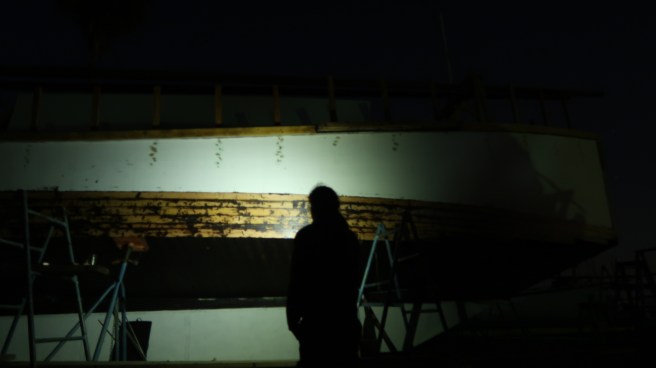

The following day was a video making day for me and a trimming day for Garrett.


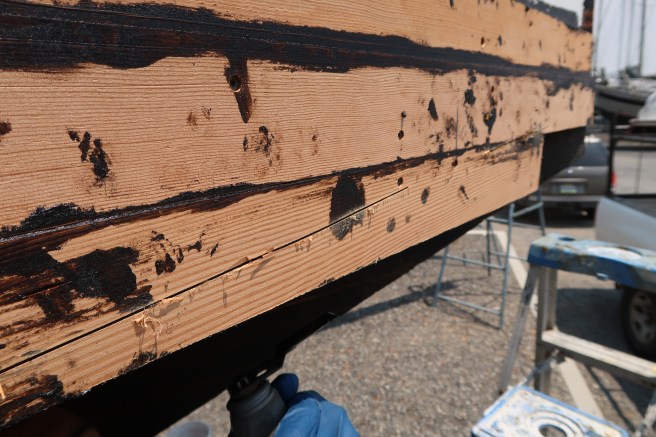
We’re really happy with how the sheathing is coming. Garrett just hates the sticky… It’s going to be so great when it’s complete and a huge mental ease for Garrett knowing it’s below us. Speaking of below us, so presently it is gravel but she is a boat and one day she’ll float! This project is the last major one before launching day. After the sheathing is finished we’ll be ready to slap some bottom paint on her and wheel her to the ramp. A few odds and ends remain but no more cabin modifications or holes–I probably shouldn’t say that out loud—good thing I just wrote it 😉



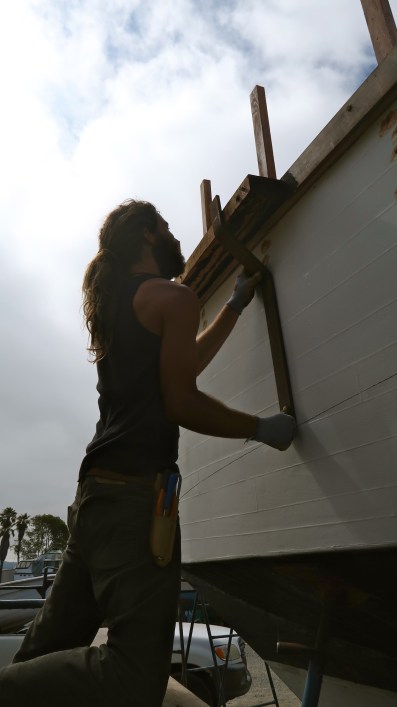

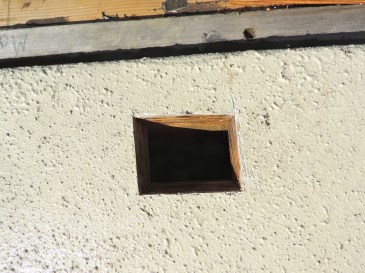


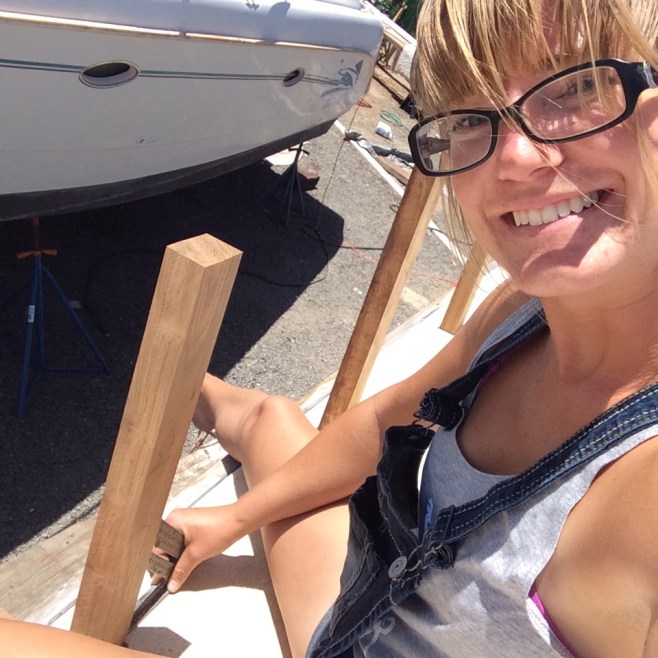
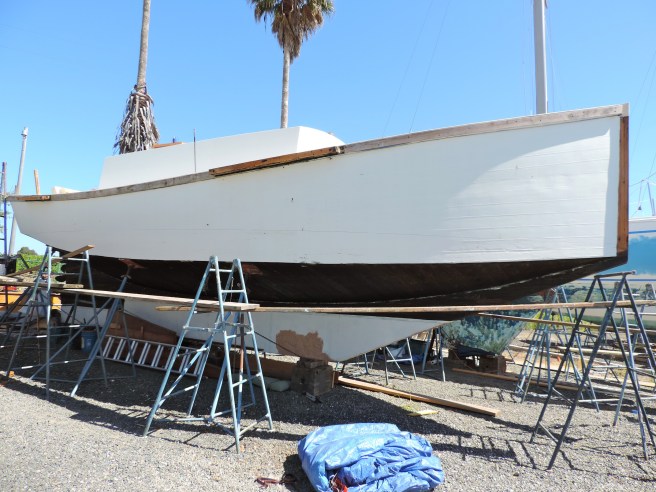 So here’s our mighty tiny ship. Now with the appropriate cabin there was one more thing to fix; the bulwarks. Rediviva needs a ships bulwarks. Tall and planked. Something you can lash lines to and keep you on board crossing the Tehuantepec.
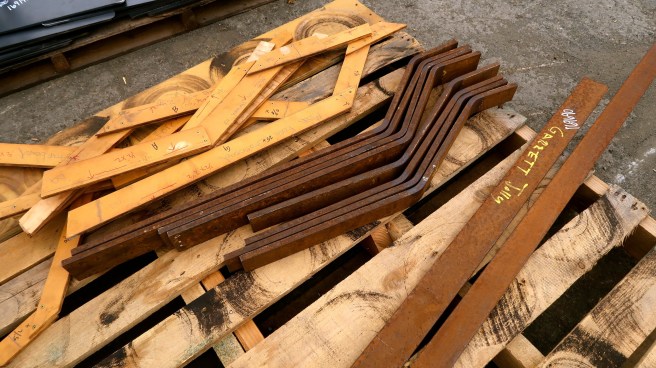
 Getting back to the “dream” or “fantasy” as Garrett says he tore out the last of his “compromises.” We had stubby bulwark posts before only 6 inches tall. We’re going 18 inches this time. They’ll rise up with the sheer so maybe 16 inches towards the transom and then kicking up to 18 at the bow rising gradually from the end of the cabin. Not only will these bulwarks be bad ass but they will also be safe and strong. Garrett rummaged through our black locust stock. He was so stoked to be finally getting to use the locust. It was one of our first lumber purchases from a neighbor in Washington with a saw mill; he processed a hand-full of branches and kilned beautiful black locust boards for us.