
Thanks everyone for the positive feedback! Hope you enjoy the video!
Author: grjolly
Westerbeastie takes to the sky!
So as i’ve mentioned before we have many awesome neighbors in this small mountain community. With that being said it’s no surprise that one simple comment of ” yea I don’t know how the hell i’m gonna get that engine in the boat” while taking to a friend that stopped by, brought a massive boom truck to the property. In less than an hour our 630 pound diesel was plucked up and gently set inside the boat as if it were made of styrofoam. People are like that up snowden. Kind, generous, and more often than not they own heavy machinery! Thanks guy’s we would have had a hell of a time with it ourselves!
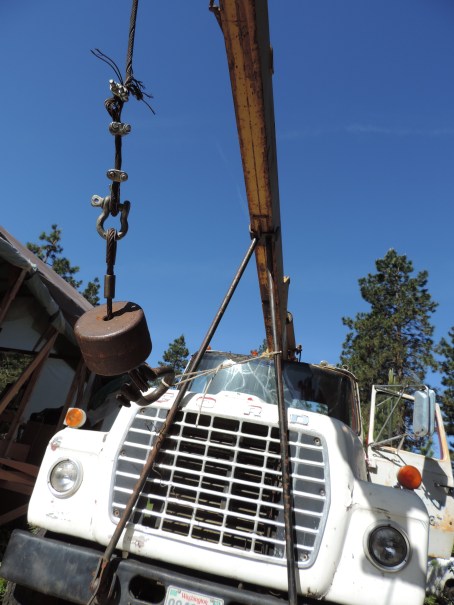 So I was envisioning a regular sized truck with a little boom crane on it…. Not so much!
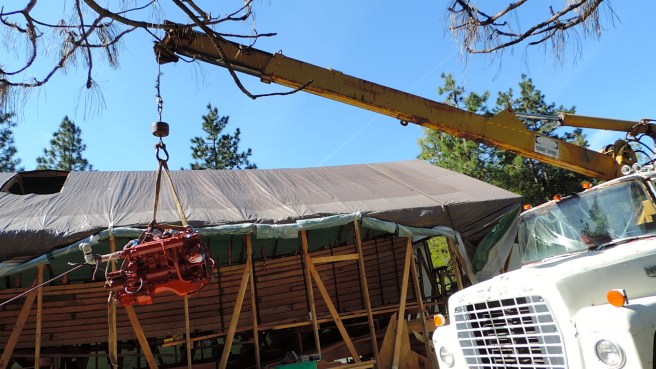 The engine was like a a pebble to this thing.
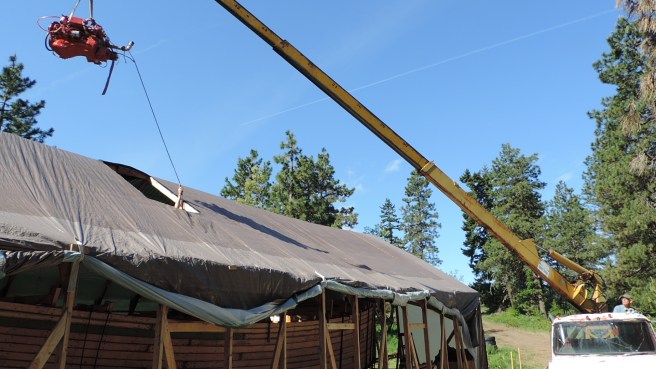 A couple slices with a knife… Sun roof! How quaint…
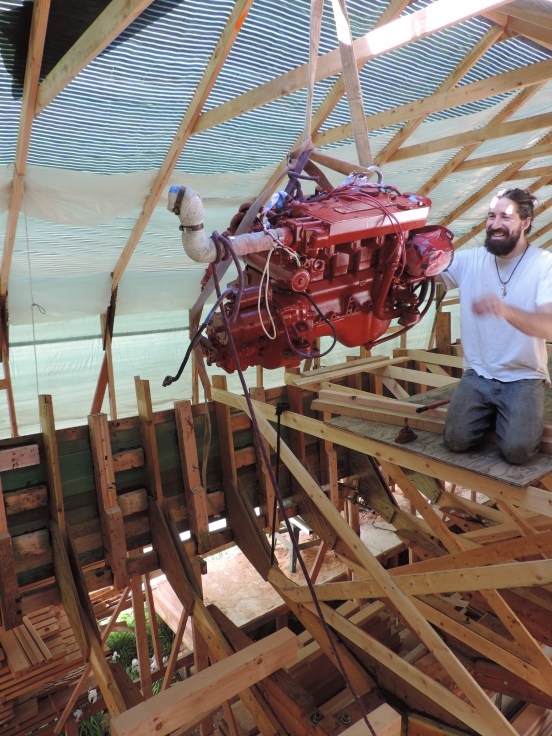 Stoked!
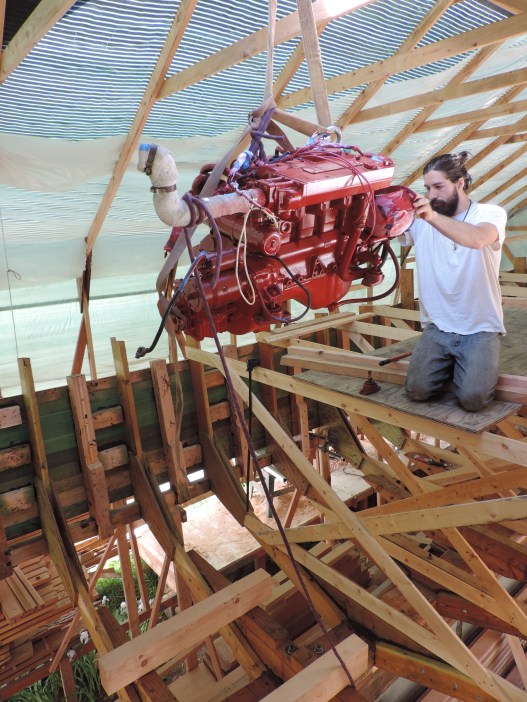 Now back to business.
 and she’s in!! Just blocked in place for now. I’ll make permanent mounts later.
Well another monumental task completed! Only a few odds and ends and we’ll start on bottom planking! We’re getting there!
Thats all for now.
Garrett & Ruth
To the chine!
Well there’s good and bad news to report… Bad news we have had some serious delays lately because of my back. Good news i’m back up and hobbling and so close to being done with the topsides! We are all the way down to the chine now, and only have several more pieces to fit. We have all of our lumber bought and planed, and can just keep chippin away. If weather cooperates I see us finishing the topsides this week! Needless to say we’re pretty stoked. It’s really exciting also knowing that the bottom planking should only take a fraction of the time on account of being cross planked. On top of that just knowing that we are trucking the boat to a yard this fall really keeps us charging! Unfortunately I spaced on taking pictures before coming into town, but will follow up with some soon!
Episode 10!
Without further adieu!
engine makeover, and more wood!
I managed to pull myself away from planking long enough to clean up and repaint the engine! She looks mighty sexy, and all went well aside from the spray can turned rocket that shot a volatile plume of red paint everywhere… We also stumbled upon a gold mine of clear fir when we were on a supply run in portland. The name of the company is Sustainable Northwest Woods I highly recommend them to anyone needing great quality fir at very reasonable prices. Not only were their prices great, but the staff was incredibly friendly and helpful! Check them out! Sustainable Northwest Woods
These are very exciting days as they are the last days of topside planking! We are down to the last full run on the starboard side, and almost done with the 2nd to last run on the port. After that there are a couple runs from the bow that nib into the chine plank. Then all We have to do is spile the chine plank! I can practically taste the libations of the whiskey plank party!
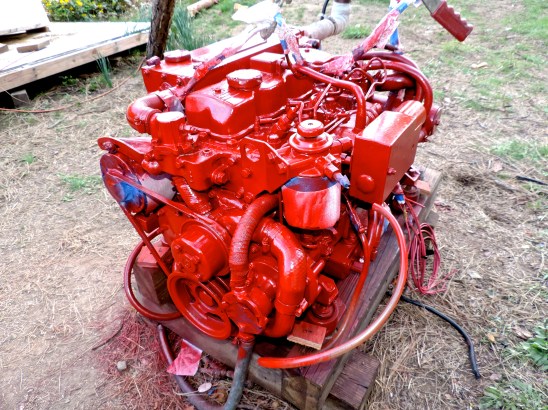
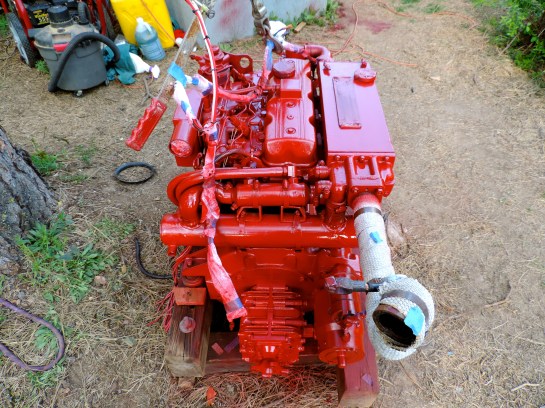
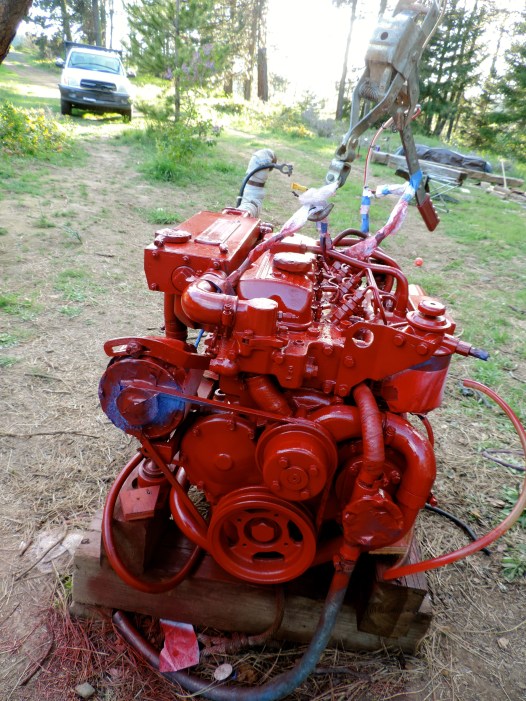 Lookin sexy!
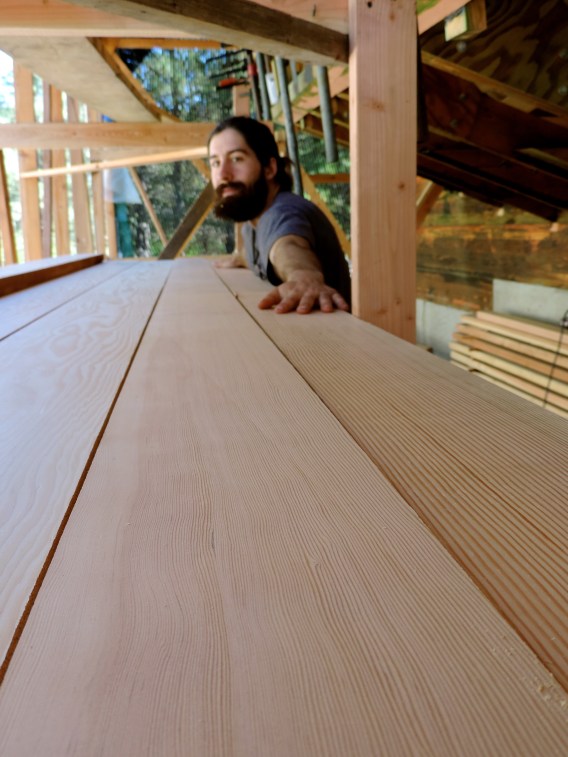 some of the beautiful fir from sustainable northwest woods fresh from the planer!
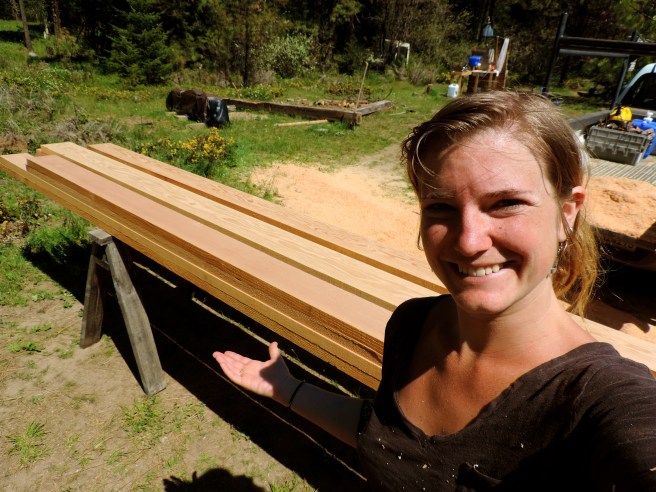 planed down to planking thickness. Note all the saw dust!
We will be uploading the latest video as soon as I movie stops malfunctioning …
Thats all for now!
Seeing her for the first time!
I don’t have to much time on the interwebs today so this will have to be a short one. We finally rolled up the sides of the shed! It was an incredible feeling standing back and really seeing the boat for the first time. Inside the shed you just can’t really see her. Everything is too cramped, all of her beautiful curves and sweeping lines are hidden from view. The pictures really don’t do her justice, but they’re better than nothing…

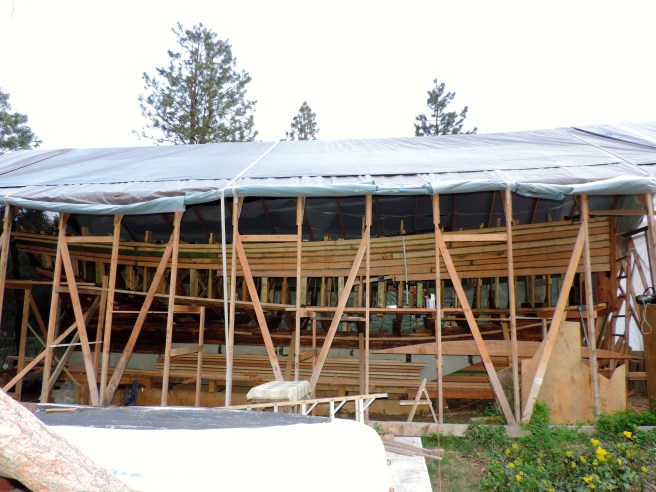
More to come soon!
Imagining we’re on deck
Garrett placed a sheet of plywood on top of the frame bracing and it is so cool to look down into the boat! Man it is getting hot up there now near the rafters, can’t wait to tear off the sides of the shed and get some good breeze flowing.


Installing intermediates, getting quotes for trucking, and making frittatas!
Ruth here:
“This past week has consisted of hunting for materials, messing around with sticky substances like tar and epoxy, more supply runs, an assembly line, and finally installing the 34 intermediates to the boat. She looks so solid! Garrett changed his mind 4 times before deciding the “perfect” method. 3 intermediates are of the first design and the rest are the final verdict besides the first 4 in the bow which are cut from 4×6’s …. no joke they’re beef-cakes


We’ve also sent out 4 requests to quote the cost of trucking the boat to the San Francisco Bay Area for completion in a boatyard. We are pretty confident we will be able to have her ready for transport in the fall, September or October. Really exciting stuff. In the slot that asks for the “Make” it felt weird to type “Homebuilt.”
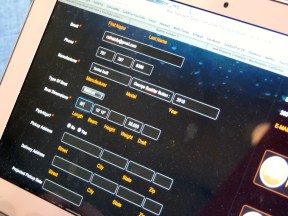
This has nothing to do with the boat and I can just picture Garrett shaking his head at me but I think it’s pretty cool and am quite proud of myself. Without an oven and no recipe I made a frittata! And with our neighbors duck eggs too! We even had some French Rose wine in the fridge to accompany and the beautifulest of mornings to enjoy it!


Cheers to progress!”


Meet the Westerbeastie
NEW VIDEO
WE HAVE A MOTOR!!!!
topside progress
We are well past the halfway point planking the topsides! The planks are going on really fast now, and they are all the way down to the gussets. Which means I have to stop my momentum to install intermediate frames… The intermediates are fames that extend from the sheer to the chine. There will be one intermediate between each set of frames. They are really easy to make, and go pretty fast but it’s a bit tedious seeing as there are 34 of them to do.
We had an awesome lumber picking day at home depot of all places. A few good hours of sorting through the lumber piles we came out with over 120 LF of clear doug fir 2×8’s! This will save us hundreds of dollars on bottom planking! (they will be ripped down to 2×6)
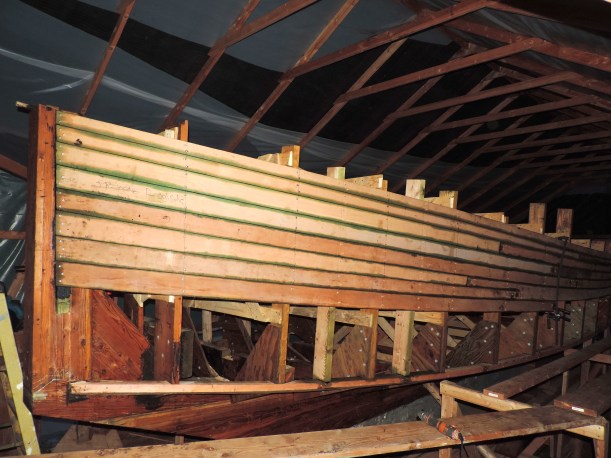 Much more area covered than whats left to cover! You can see two of the intermediates in between the 2nd and 3rd / 3rd and 4th frames.
 So far this is the only plank that required more patience, and precision. This plank is notched to except two planks with more extreme taper. This helps make up for the extra surface area towards the bow.
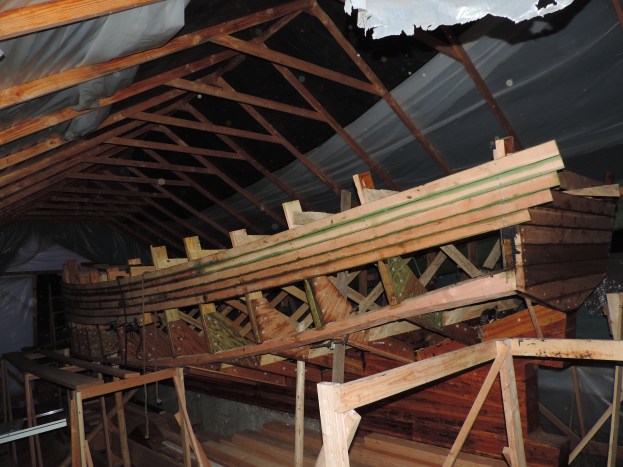 Nice view of her sheer line. The planks at the stern are simply run out past the transom, and will be trimmed later.
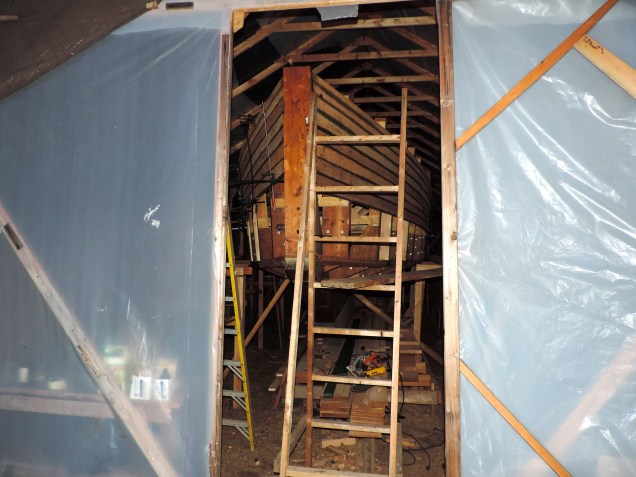 I can’t wait until we can see her in the open not cooped up in the shed!
Thats all for now!

